

Lake Mansarovar: The Sacred Lake Below Kailash
Lake Mansarovar at 4,590 metres: what the sacred lake below Kailash means to four faiths, its twin lake Rakshastal, and how to spend time on its shore.
27 November 2026
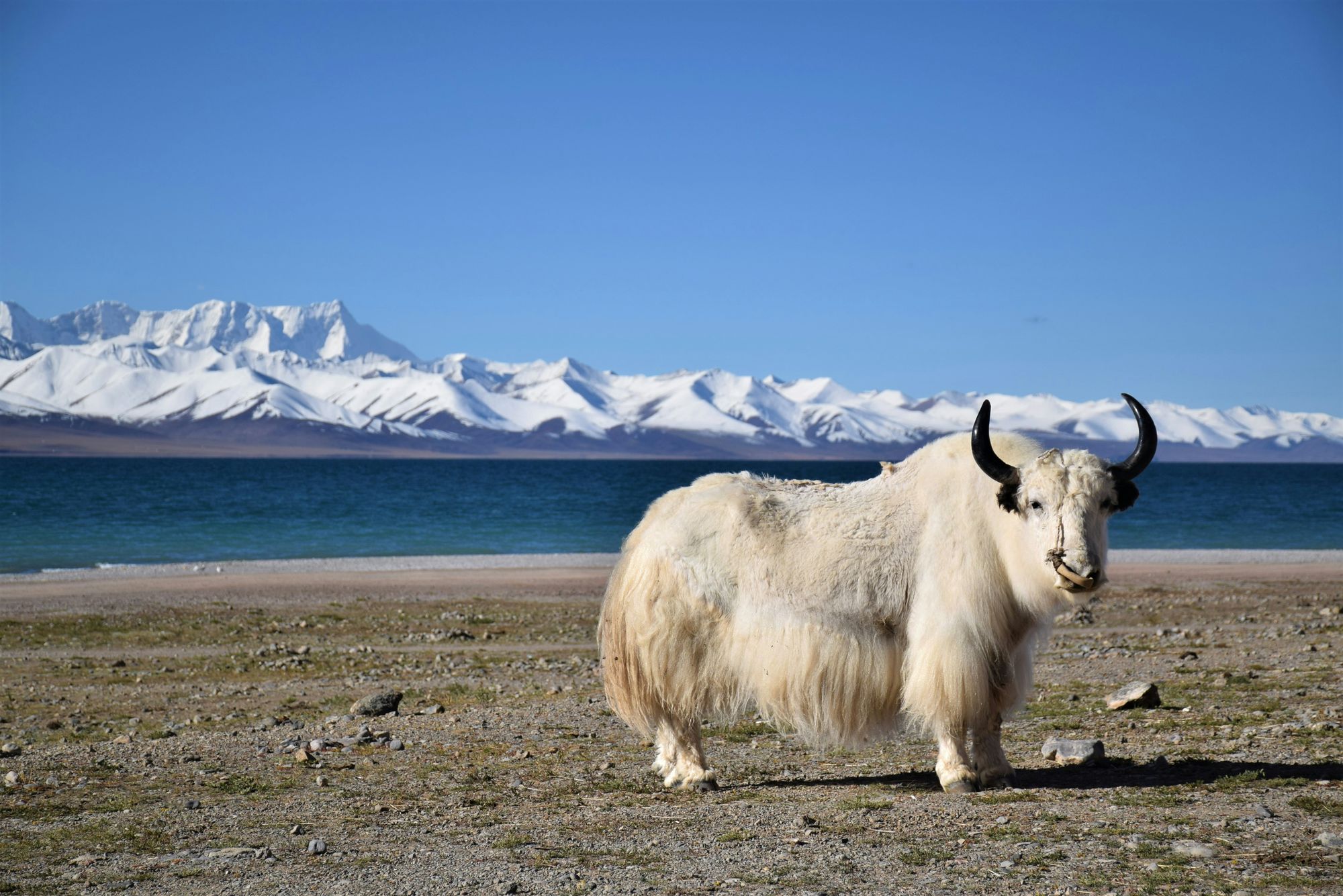
Lake Mansarovar lies at about 4,590 metres on the Tibetan plateau, a short drive south of Mount Kailash. It is one of the highest large freshwater lakes in the world, and for four religions one of the holiest. Most pilgrims to Kailash come to the lake first. Many say it is the lake, not the mountain, that they remember most.
The short answer
- Height: about 4,590 metres above sea level (surveys give 4,586).
- Size: about 320 square kilometres, some 88 kilometres around, and up to 100 metres deep.
- Tibetan name: Mapam Yumtso.
- Its twin: Rakshastal, a salt lake immediately to the west, joined to Mansarovar by a natural channel, the Ganga Chhu.
- Sacred to: Hindus, Buddhists, Jains and followers of Bön.
The lake of the mind
The name comes from Sanskrit: manas, the mind, and sarovar, a lake. Hindu tradition holds that the lake was first created in the mind of Brahma. To bathe in it, or to drink its water, is held to wash away the sins of a lifetime, and pilgrims carry its water home to those who could not make the journey. Bathing in the lake itself has been prohibited by the authorities since 2018, so today pilgrims draw its water at the shore, and many bathe instead in the hot springs near Chiu Gompa.
For Buddhists, Mansarovar is the mother of the world, as Kailash is its father. Tradition holds that Queen Maya bathed here before the Buddha was conceived. For followers of Bön, it is where their founder, Tonpa Shenrab, bathed on first coming to Tibet. Jains honour it within the sacred landscape of Ashtapada. We have written about what the mountain means to each faith.
Two lakes, light and dark
West of Mansarovar lies Rakshastal, a long salt lake of a deeper, darker blue. Hindu tradition associates it with Ravana, the demon king, who is said to have performed his penance there. Where Mansarovar is held to be the lake of light, Rakshastal is its shadow, and pilgrims do not take its water. The two are joined by the Ganga Chhu, a narrow channel through which the sacred lake overflows into the salt one.
Seen together from the low hills between them, with Kailash white on the northern horizon, they make one of the great views of the plateau.
Around the shore
Monasteries once ringed the lake. Many were destroyed during the Cultural Revolution, and some have since been rebuilt. The best known today is Chiu Gompa, on a steep rocky outcrop above the shore, looking across the water to the mountain. Hot springs below it are used for ritual bathing.
The full circuit of the lake is some 88 kilometres. Most pilgrims now drive it, stopping to pray at the shore. A few still walk.
A morning at the lake
On our journey, you reach Mansarovar after the long road west and sleep on its shore. The next morning is kept free for the lake alone: the light on the water before the wind rises, the walk to the shore, water drawn from the lake for those who wish to make an offering, a soak in the hot springs at Chiu, or simply a long time looking across to Kailash. Then a short drive brings you to Darchen and the start of the Kora.
It is a deliberate pause. The lake sits at almost the same altitude as Darchen, and a night and a quiet morning there help the body before the walk ahead.
Questions we are often asked
How high is Lake Mansarovar? About 4,590 metres (15,060 feet). Surveys give figures between 4,586 and 4,590 metres.
Can you swim in Lake Mansarovar? No. Bathing and swimming in the lake have been prohibited by the authorities since 2018, and the rule was still in force in 2026. Pilgrims draw water from the shore for their rituals, and many bathe in the hot springs near Chiu Gompa instead.
What is the difference between Mansarovar and Rakshastal? Mansarovar is fresh water and sacred; Rakshastal, beside it, is salt and associated with Ravana. Pilgrims honour Mansarovar and draw its water; they avoid Rakshastal.
How far is Mansarovar from Kailash? The lake lies just south of the mountain, which is visible across the water on a clear day. Darchen, where the Kora begins, is a short drive from the shore.
Begin with a conversation
The lake is one chapter of Kailash 2027. Tell us how long you would like to stay by the water, and whether you wish to make an offering or visit the hot springs, and your journey designer will shape the morning around you.
Sources
- Elevation (4,586 m), area, circumference, depth, Mapam Yumtso, Rakshastal and the Ganga Chhu, Brahma, Queen Maya, Tonpa Shenrab, Ravana, Chiu Gompa, the Cultural Revolution: Lake Manasarovar, Wikipedia.
- Bathing in the lake prohibited since 2018; Chiu Gompa on a rocky outcrop with hot springs and a bath house: Kailash Tour Package, Mansarovar lake tour; the ban reported as continuing in 2026 by pilgrim news coverage.
- Our itinerary, the lake at 4,590 m, and the night on the shore: our Kailash 2027 page.
Every journey begins with a conversation.
Plan a journey