

The Kailash Kora, Day by Day
The Kailash kora in three days: the route from Darchen, the climb to the Dolma La at 5,630 m, where you sleep, and how a private pace changes it.
27 November 2026
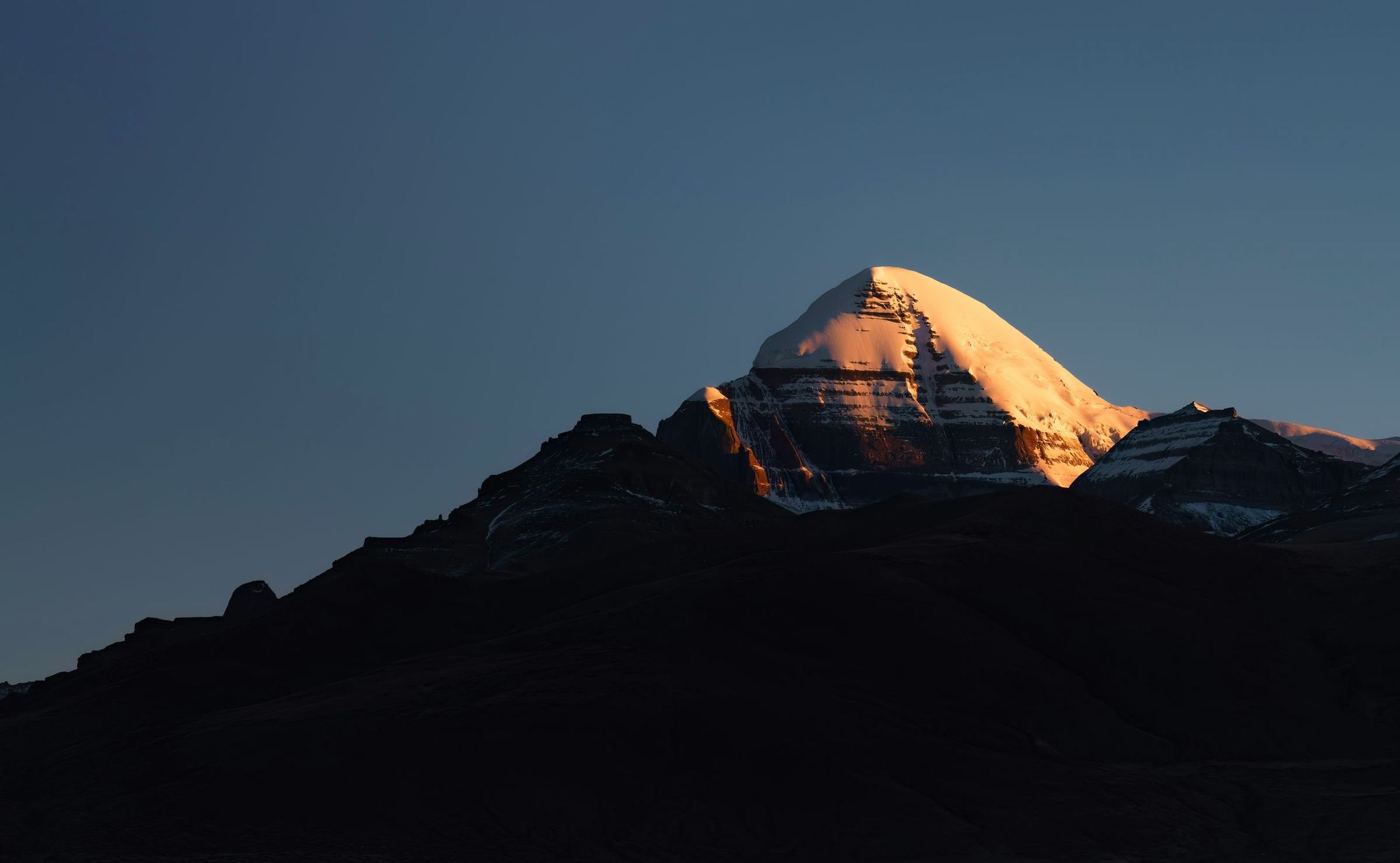
The Kailash kora is the pilgrim circuit around Mount Kailash: about 52 kilometres on foot, walked over three days, with one high pass. It begins and ends at Darchen, the small town at the mountain's foot. It is not a technical walk. It is a long one, at an altitude that asks for patience on every step.
The short answer
- Distance: about 52 kilometres in all. Surveys differ by a kilometre or two, and day figures vary with where you start.
- Time: three days for most pilgrims, two nights on the circuit.
- Highest point: the Dolma La, at 5,630 metres, crossed on the second day.
- Where you sleep: Darchen before and after, and the monastery guesthouses at Dirapuk and Zutulpuk on the way.
- Direction: Hindus and Buddhists walk clockwise. Followers of Bön walk the other way.
- Season: late spring to autumn. Snow closes the pass in winter.
Before the first step
No one should arrive at Darchen straight from the plane. The town stands at 4,575 metres, and the days before it are what make the Kora possible. On our journey, those days are two nights in Lhasa, the road west across the plateau, and a morning on the shore of Lake Mansarovar, each night a little higher than the last. If you are coming from sea level, our note on your first 48 hours in Lhasa explains why that time matters.
At Darchen, everything you do not need is left behind. On the Kora you carry only what the day requires: water, a warm layer, something to eat. Your luggage waits for you in Darchen.
Day one: into the valley of the gods
To Dirapuk. About 20 kilometres from Darchen, fewer from the valley mouth. Six to seven hours. Sleeping at c. 4,900 metres.
The first day is the gentlest. The path leaves Darchen to the west and turns north into the long valley of the Lha Chu, the river of the gods. Many pilgrims, and our own journey, drive the first stretch to the mouth of the valley and begin walking there, at the gate the Kora's pilgrims know as Yama Dwar.
Near the start stands Tarboche, the great prayer pole draped in flags, raised anew each year at the festival of Saga Dawa. High on the valley side above it sits Chuku Gompa, the first of the Kora's monasteries. The valley narrows between red cliffs that pilgrims read as temples and deities, and the walking is steady and almost level.
In the late afternoon the valley opens, and the north face of Kailash appears: a sheer wall of dark rock and snow, close enough to feel. Dirapuk Monastery faces it across the river. The guesthouse beside it is where you sleep, in a private room, with the mountain outside the window.
Day two: over the Dolma La
To Zutulpuk. About 22 kilometres. Eight to ten hours. Crossing 5,630 metres.
This is the day the Kora is remembered for. It begins before dawn, in the cold, because the climb is long and the weather on the pass is kindest in the morning.
The path climbs steadily out of the valley. Partway up, at about 5,330 metres, is Shiva-tsal, a rocky slope where pilgrims leave something of themselves behind, a piece of clothing or a lock of hair, as a sign of leaving the old life before the pass. Above it the climb steepens, and every step at this height takes its own breath.
The Dolma La is crossed under a great rock hung with layer upon layer of prayer flags. Dolma is Tara, the goddess of compassion, and pilgrims stop here to add their own flags, to pray, or simply to stand. It is the highest point of the journey, and the moment most people carry home.
The descent begins at once, steep at first, past Gauri Kund, a small green lake below the pass that Buddhists call the Lake of Compassion and Hindus know as the lake where Parvati bathed. Then the path reaches a broad valley and runs long and level to Zutulpuk, the cave monastery built around the cave where Milarepa is said to have meditated. You sleep in the guesthouse there, in a private room, after the longest day of the journey.
Day three: closing the circle
To Darchen. About 10 to 14 kilometres, depending on where the walk ends. Three to four hours.
The last day is short and gentle. The path follows the river down through a narrow gorge, past mani stones and the cairns of earlier pilgrims, and out onto the open plain. Darchen appears ahead, and the circle closes where it began. On our journey a car is waiting, and the road east takes you back to Saga by evening.
A private pace
The Kora is the same path for everyone. What changes, on a private journey, is how you walk it.
You start when you are ready, not when a group does. You stop where you are moved to stop. A horse and its handler can be arranged for any stage, including the climb to the Dolma La, and many pilgrims ride part of the way without any sense of having done less. Oxygen travels with you throughout. Your journey leader walks beside you, reads the weather and the day, and if the pass should wait, says so early and calmly.
Questions we are often asked
How long is the Kailash kora? About 52 kilometres, usually walked in three days. Some Tibetan pilgrims walk it in a single long day.
How hard is the Kailash kora? It needs no climbing skill, but the altitude makes it demanding. The second day, over the Dolma La at 5,630 metres, is long and steep. Good health, time to acclimatise beforehand, and a steady pace matter more than athletic fitness.
Can I ride a horse on the kora? Yes. Horses with local handlers can be arranged for any stage. On the steepest ground, your journey leader will advise where it is safer to walk.
Where do you sleep on the kora? In the monastery guesthouses at Dirapuk and Zutulpuk, the only houses on the circuit. They are simple, and we arrange private rooms.
Begin with a conversation
We walk the Kora between May and August 2027, in three days, as the final chapter of Kailash 2027. If you would like to know why the summit itself is left untouched, we have written about that too. Tell us when you would like to walk. Your journey designer in Kathmandu will reply promptly and compose the rest around you.
Sources
- Total length of about 52 km, day stages of about 20 and 22 km, walking hours, Darchen at 4,575 m and the Dolma La at 5,630 m: Tibet Vista, Kailash kora route map, updated 18 November 2026.
- Day three given as about 10 km, Dirapuk at about 4,900 m, and pilgrims who walk it in one day: Tashi Delek, Kailash kora guide 2027.
- Shiva-tsal at about 5,330 m and its meaning: Alpine Luxury Treks, Dolma La and Dream Tibet, Dolma La.
- Directions of walking, Milarepa and Zutulpuk, the four faiths: Mount Kailash, Wikipedia and Britannica.
- Our itinerary, the monastery guesthouses, horses and oxygen: our Kailash 2027 page.
Every journey begins with a conversation.
Plan a journey