

Why Mount Kailash Is Sacred: One Mountain, Four Faiths
What Mount Kailash means to Hindus, Buddhists, Jains and followers of Bön, why Lake Mansarovar matters too, and how a visitor can walk with respect.
27 November 2026
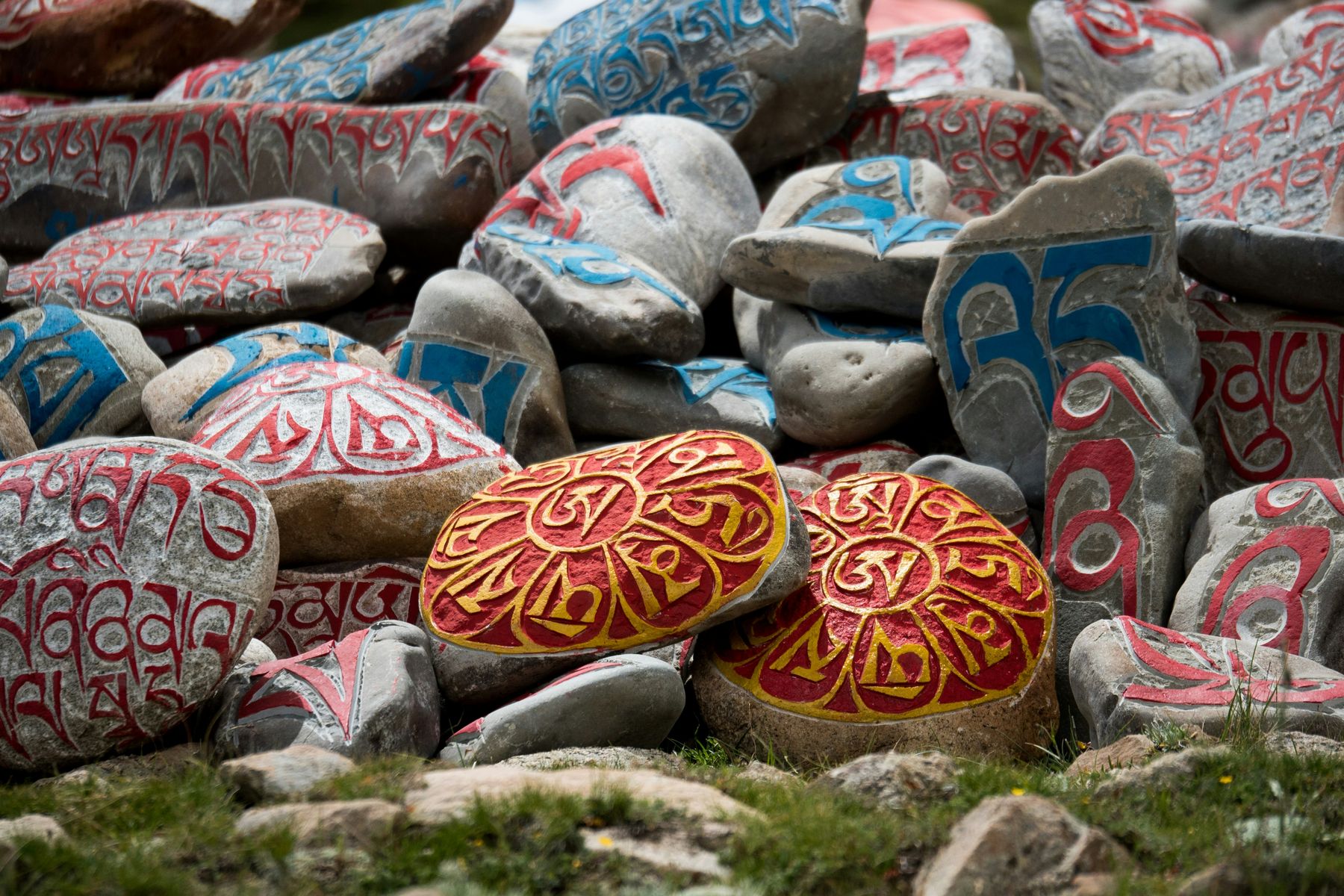
Mount Kailash is a single peak of 6,638 metres in the far west of Tibet. It is also, for four religions, the centre of the world. Hindus, Buddhists, Jains and followers of Bön each hold it sacred for their own reasons, and for centuries they have walked around it side by side. Few places on earth are shared in this way.
The short answer
- Hinduism: the home of Shiva and Parvati.
- Buddhism: Kang Rinpoche, the precious jewel of snow, home of the deity Demchok and identified with Mount Meru.
- Jainism: Ashtapada, where the first Tirthankara, Rishabhadeva, attained liberation.
- Bön: Yungdrung Gutseg, the nine-storey swastika mountain, once the heart of the kingdom of Zhang Zhung.
None of the four permits the summit to be climbed. All four honour the mountain by walking around it.
In Hinduism: the home of Shiva
For Hindus, Kailash is where Shiva lives, in stillness and meditation, with his consort Parvati and their sons, Ganesha and Kartikeya. To walk around the mountain, the parikrama, is to walk around the god himself. To see it at all is darshan, a blessing.
The lake below, Mansarovar, is part of the same devotion. Its name means the lake of the mind: in Hindu tradition it was created in the mind of Brahma. For centuries pilgrims bathed in it. Today, with bathing in the lake itself no longer permitted, they carry its water home, as a cleansing of the soul.
In Buddhism: the precious jewel of snow
Tibetans call the mountain Kang Rinpoche. In Buddhist cosmology it is identified with Mount Meru, the axis of the universe, and it is the home of Demchok, a meditational deity of supreme bliss. Kailash is held to be the father of the world, and Mansarovar the mother. Tradition holds that Queen Maya bathed in the lake before the Buddha was conceived.
Tibetan Buddhists also remember Milarepa, the eleventh-century poet and yogi, who is said to have won the mountain for Buddhism in a contest with a master of Bön. The cave at Zutulpuk, on the Kora, is where he is said to have meditated. We have written about that story, and the one ascent it describes.
In Jainism: Ashtapada
Jains know the mountain as Ashtapada. It is where Rishabhadeva, the first of the twenty-four Tirthankaras, the great teachers of the Jain path, attained liberation from the cycle of rebirth. Tradition holds that his son Bharata raised shrines here to all twenty-four.
In Bön: the nine-storey mountain
Bön is the religion of Tibet before Buddhism. For its followers the mountain is Yungdrung Gutseg, the nine-storey swastika mountain, the swastika here being the ancient Bön symbol of permanence. It is the seat of a sky goddess, and the spiritual centre of the ancient kingdom of Zhang Zhung, which ruled western Tibet long before the Tibetan empire. Tonpa Shenrab, the founder of Bön, is said to have bathed in Mansarovar. Bön pilgrims walk the Kora anticlockwise, meeting the clockwise stream of Hindus and Buddhists on the path.
Where the great rivers begin
There is a geography beneath the faith. Four of the great rivers of South Asia rise within reach of the mountain: the Indus, the Sutlej, the Brahmaputra and the Karnali. The Karnali flows south into Nepal and on to become the Ghaghara, a tributary of the Ganges. For civilisations that grew along those rivers, a mountain at their common source was bound to be holy.
Walking with respect
The Kora is open to everyone, whatever they believe. Many who walk it hold no faith at all. A few courtesies matter to those who do:
- Walk in the direction your companions walk. With Hindu and Buddhist pilgrims, that is clockwise, keeping the mountain, and every stupa and mani wall, on your right.
- Ask before photographing pilgrims, especially those at prayer or making prostrations.
- Leave prayer flags, stones and offerings where you find them.
- Carry out everything you bring.
Questions we are often asked
Why is Mount Kailash sacred? Because four religions hold it to be the centre of the world: the home of Shiva for Hindus, the home of Demchok and Mount Meru for Buddhists, the place of Rishabhadeva's liberation for Jains, and the nine-storey mountain of Zhang Zhung for Bön.
What do Buddhists call Mount Kailash? Kang Rinpoche, the precious jewel of snow.
Can non-believers walk the Kora? Yes. The Kora is walked by people of every faith and none.
Which way do pilgrims walk around Kailash? Hindus and Buddhists walk clockwise. Followers of Bön walk anticlockwise.
Begin with a conversation
For some of our guests, Kailash is the fulfilment of a lifetime's devotion. For others it is curiosity, or a sense that some places ask to be walked. Both are welcome. Our journey, Kailash 2027, can include a private puja at Pashupatinath before you fly, or quiet days at the great stupas of Kathmandu. Tell us what brings you, and your journey designer will compose the rest.
Sources
- Elevation, the four faiths, Shiva and his family, Meru, father and mother, Rishabhadeva, Zhang Zhung and the sky goddess, the Milarepa legend, the four rivers, and the directions of walking: Mount Kailash, Wikipedia and Britannica.
- Mansarovar as the lake of Brahma's mind, Queen Maya, Bharata's shrines, Tonpa Shenrab: Lake Manasarovar, Wikipedia.
- Bathing in the lake prohibited (since 2018, continued in 2026): Kailash Tour Package, Mansarovar lake tour and 2026 pilgrim reports.
- Kang Rinpoche, Demchok (Chakrasamvara) and Ashtapada: Tibet Tourism, Mount Kailash significance and Nepal Trekking Tour, four religions.
- Yungdrung Gutseg: Global Summit Guide, Mount Kailash pilgrim's guide.
Every journey begins with a conversation.
Plan a journey