

Why No One Has Climbed Mount Kailash
Why no one has climbed Mount Kailash: the climbers who tried, the one who refused, the ban, and why four faiths walk around the mountain instead.
27 November 2026
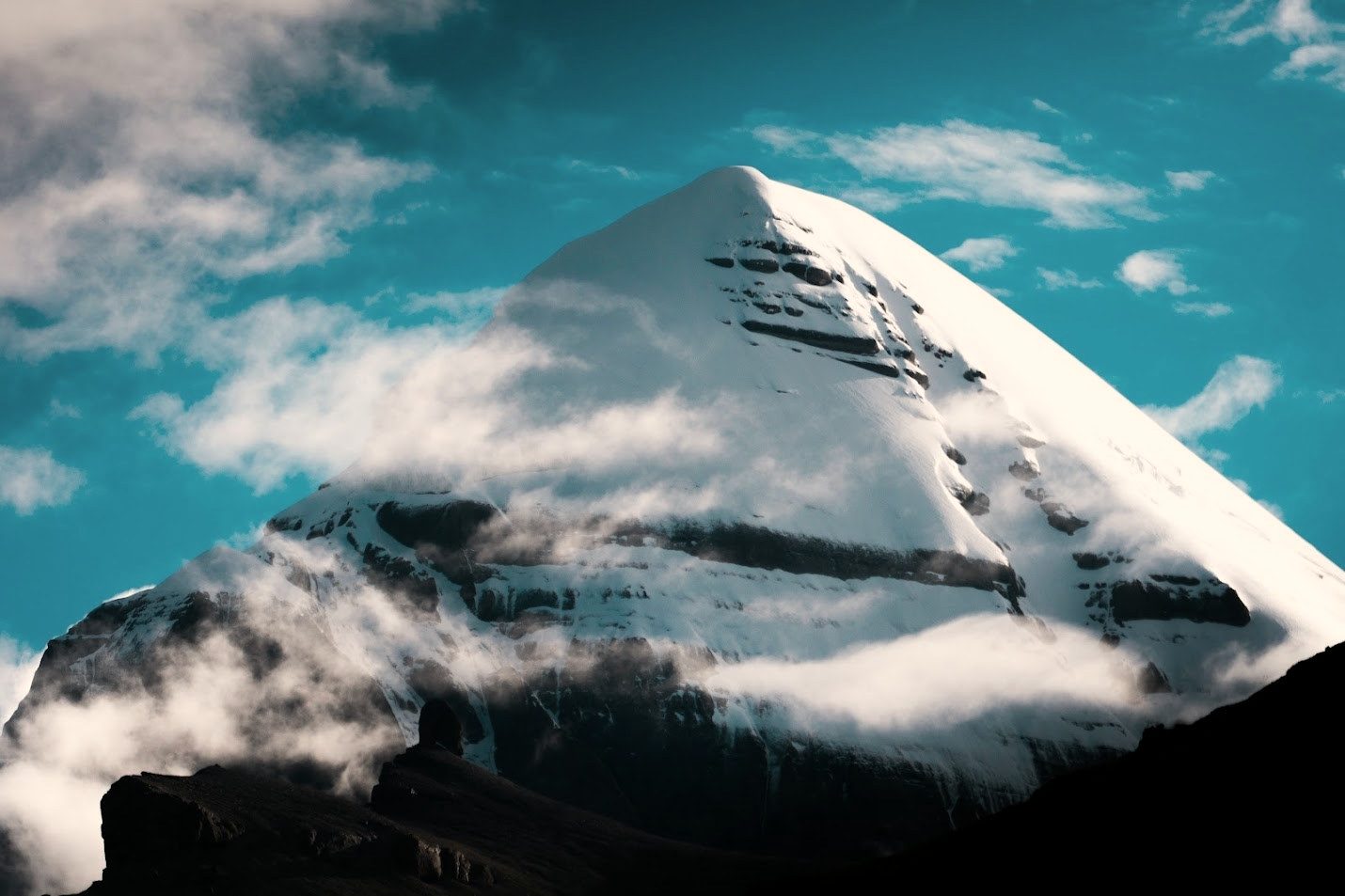
No one has climbed Mount Kailash. There is no recorded ascent of the mountain, and climbing it is now prohibited. The reason is not that it is too high or too hard. It is that, for hundreds of millions of people, the summit is not ours to stand on.
The short answer
Mount Kailash rises to 6,638 metres in the far west of Tibet. Climbers have studied it, and at least two parties made early attempts. In the 1980s one of the greatest mountaineers alive was offered the chance and declined. In 2001 a Spanish team asked to climb it and was refused. Today the Chinese authorities prohibit any climbing on the mountain, out of respect for its place in four religions.
What pilgrims do instead is walk around it. The Kora, the circuit around the mountain, is about 52 kilometres long and crosses the Dolma La at 5,630 metres.
A mountain that could be climbed
By Himalayan standards Kailash is not especially tall. Hundreds of peaks higher than it have been climbed, many of them by ordinary amateur expeditions. Its four faces are steep and banded with rock and ice, but mountaineers who have studied it consider an ascent technically possible.
The first serious look came in 1926. Hugh Ruttledge, a British official who later led an Everest expedition, walked the Kora and studied the north-east ridge. On the other side of the mountain, Colonel R. C. Wilson and a Sherpa named Tseten examined the south-east ridge, which Tseten judged a feasible route to the top. They tried it, and heavy snowfall turned them back.
Ten years later, the Austrian climber and writer Herbert Tichy came to the mountain and also attempted it. He did not reach the summit either.
No climbing attempt since is on record.
The climbers who chose not to
In the mid-1980s the Chinese authorities are reported to have offered Reinhold Messner, the first person to climb all fourteen of the world's 8,000-metre peaks, the chance to climb Kailash. He declined. His explanation has been quoted ever since: "If we conquer this mountain, then we conquer something in people's souls." Kailash, he added, was neither especially high nor especially hard; climbers should look for something harder.
In 2001 a Spanish team asked for permission to climb the peak. It was refused, and climbing on Kailash has been prohibited ever since.
It is rare for mountaineering to stop at a summit by choice. On Kailash it has.
Why it matters to four faiths
Kailash is sacred in four religions, and each holds it for its own reasons.
- In Hinduism it is the home of Shiva, who lives there with Parvati and their sons, Ganesha and Kartikeya.
- In Buddhism it is identified with Mount Meru, the centre of the world. Kailash is held as the father of the world, and Lake Mansarovar, below it, as the mother.
- In Jainism it is where Rishabhadeva, the first Tirthankara, attained liberation.
- In Bön, the religion of Tibet before Buddhism, it was the heart of the ancient kingdom of Zhang Zhung and the seat of a sky goddess.
To stand on its summit would be, for each of them, to stand on something that is not meant to be stood upon. That shared conviction, across faiths that agree on little else, is the real reason the mountain remains unclimbed.
The one who reached the top, in legend
Tibetan Buddhists do tell of one ascent. In the eleventh century the poet and yogi Milarepa met Naro Bönchung, a master of Bön, at the mountain. Their contest of power went on with neither able to win, until they agreed that whoever reached the summit first would prevail. At dawn Naro Bönchung flew upward on his drum. Milarepa rode the first rays of the sun and was there before him. He then gave the neighbouring peak to the followers of Bön, and it is still called Bönri.
It is a story about devotion rather than mountaineering, and it is told on the Kora to this day.
The stories online
Kailash attracts other stories too. Online you will read that it is an ancient pyramid, that time passes faster on its slopes, or that climbers who tried it vanished. None of these can be traced to evidence, and the record of real attempts is short and well documented. The mountain does not need them. Its true history is stranger: a peak that could be climbed, left alone by choice.
How to honour it instead
The pilgrimage is not to the top, but around it. Hindus and Buddhists walk the Kora clockwise; followers of Bön walk it the other way. Most pilgrims complete it in three days, sleeping at the monastery guesthouses of Dirapuk and Zutulpuk, and crossing the Dolma La on the second morning. Some Tibetans walk it in a single day. A few measure it with the length of their own bodies, in prostrations, over weeks.
Our journey, Kailash 2027, walks it over three days between May and August, with oxygen at your side and a horse and handler for any stage you wish. If you are wondering whether you can go next year, our guide to permits, visas and the season sets it out.
Questions we are often asked
Can you climb Mount Kailash? No. Climbing the mountain is prohibited. Pilgrims and travellers walk the Kora around its base instead.
Has anyone died climbing Mount Kailash? There is no reliable record of a death in a climbing attempt. The documented attempts, in 1926 and 1936, were turned back by snow and terrain. Stories of fatal climbs found online cannot be traced to a source.
How high is Mount Kailash? Most surveys give 6,638 metres (21,778 feet). Figures vary slightly between sources.
Is Mount Kailash in India? No. It stands in Ngari, in the far west of Tibet, a region of China, close to where China, India and Nepal meet. Lake Mansarovar lies just to the south.
Begin with a conversation
Tell us when you would like to walk around the mountain. Your journey designer in Kathmandu will reply promptly, and compose Kailash 2027 around you.
Sources
- Elevation, the 1926 Ruttledge and Wilson attempt, Tichy in 1936, Messner's refusal, the 2001 Spanish request, the present prohibition, the four religions, the Milarepa legend, and the directions of walking: Mount Kailash, Wikipedia, which cites the original accounts.
- The Messner quotation, confirmed in Suunto, Kailash: the mountain that calls and Mountain Planet. Sources differ on when he said it (in the 1980s, or in 2001 about the Spanish plan), so the article does not date the quotation.
- The 2001 refusal: Tibet Yulong, why Kailash cannot be climbed.
- Some pilgrims walk the Kora in a single day: Tashi Delek, Kailash kora guide 2027.
- Kora length and the Dolma La: our Kailash 2027 page. Wikipedia gives 53 km; most guides give about 52 km.
Every journey begins with a conversation.
Plan a journey