

Tigers in Nepal: What the 2026 Census Found
Nepal counted 429 wild tigers in 2026, up from 121 in 2009. The figures park by park, why Bardia fell, how the count works, and where to see a tiger.
27 November 2026
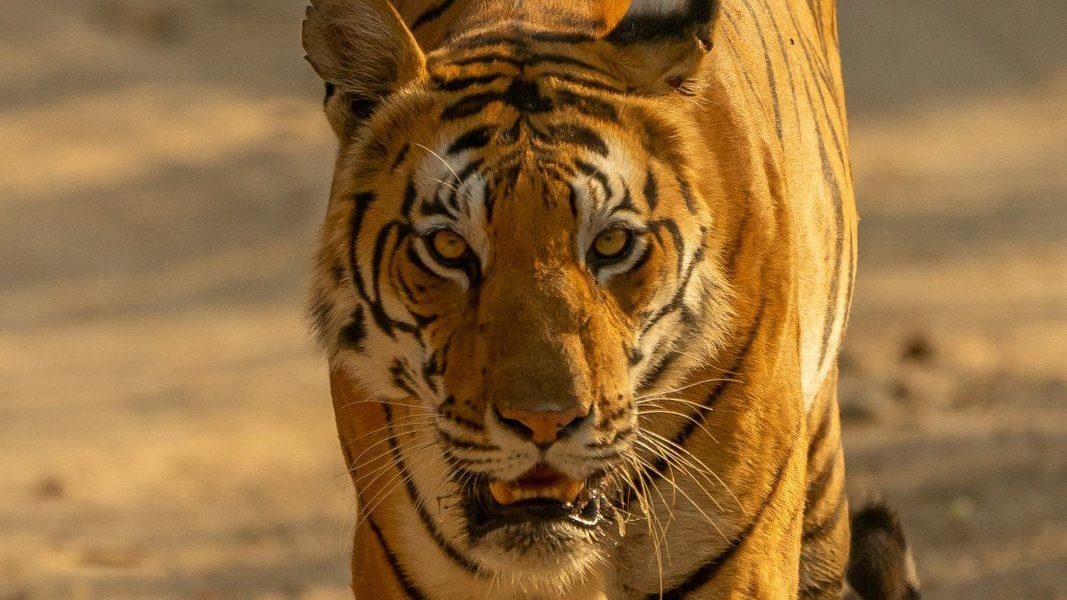
Nepal now has 429 wild tigers. The figure was announced on 29 July 2026, International Tiger Day, by the Department of National Parks and Wildlife Conservation, and it is the highest Nepal has recorded. In 2009 the country counted 121. In seventeen years the number has more than tripled.
This is what the census found, park by park, how the count is made, and why one park went the other way.
The short answer
Nepal counted 429 wild Bengal tigers in its 2026 census, up from 355 in 2022. They live in five protected areas in the southern lowlands, the Terai. Chitwan holds the most, 145. Bardia, with 112, is the only park where the number fell.
Seventeen years, five counts
| Year | Wild tigers in Nepal |
|---|---|
| 2009 | 121 |
| 2013 | 198 |
| 2018 | 235 |
| 2022 | 355 |
| 2026 | 429 |
In 2010 the thirteen countries that still had wild tigers met in St Petersburg and agreed to try to double their numbers by 2022. Nepal was the first to do it, and has kept rising since.
Park by park
| Park | 2022 | 2026 | Change |
|---|---|---|---|
| Chitwan | 128 | 145 | Up 17 |
| Bardia | 125 | 112 | Down 13 |
| Parsa | 41 | 71 | Up 30 |
| Banke | 25 | 51 | Up 26 |
| Shuklaphanta | 36 | 50 | Up 14 |
The strongest growth came in the smaller parks. Banke, which borders Bardia, roughly doubled. Parsa, east of Chitwan, rose by almost three quarters. As the older parks fill, young tigers move out to find territories of their own, and these parks are where many of them settle.
How the tigers are counted
Nobody counts tigers by sight. The fifth National Tiger and Prey Base Survey placed 3,696 motion-triggered cameras across a grid inside the five tiger parks and the community forests beside them, between 16 December 2025 and 23 April 2026. From the photographs, researchers identified 373 individual tigers.
Every tiger's stripes are unique, like a fingerprint. Researchers match the photographs, animal by animal, and use the pattern of repeat captures to estimate the whole population. That is why the result comes with a range: the best estimate is 429, with 95 per cent confidence that the true number lies between 402 and 500. The survey also counts prey, the deer and wild boar that tigers need, because a park can only hold as many tigers as its prey can feed.
Why Bardia fell
Bardia was one of Nepal's strongest tiger parks. In 2022 it had the second-highest density of tigers in the country. In 2026 its count fell from 125 to 112, while every other park rose.
No single cause has been confirmed. Researchers are studying three main explanations:
- Dispersal. As density rose, some tigers may have moved out into the community forests around the park, and across the border into India.
- Fighting. Crowded tigers fight over territory, and some fights end in death.
- Pressure at the edges. Roads, settlements and other building around the buffer zone narrow the corridors tigers use.
The neighbouring park, Banke, doubled in the same years. Some of Bardia's tigers may simply have moved next door. Further monitoring of how tigers move between the parks will tell.
For a traveller, Bardia still holds Nepal's second-largest tiger population, and its quiet trails and open riverbanks are why so many people choose it to track a tiger on foot.
Tigers and people
More tigers bring more meetings with people who live beside the parks. The numbers here have been moving in the right direction. Deaths of people caused by tigers fell from 21 in the fiscal year 2021/22 to 12, then 10, then 7 in 2024/25, according to figures compiled by the National Trust for Nature Conservation.
The recovery rests on the people of the Terai as much as on the parks: community forests that link one park to the next, patrols, and compensation when livestock is lost. Part of every GLOCAL Village journey funds the patrols and monitoring that keep these forests wild. Our Conservation page sets out how.
What it means for seeing a tiger
More tigers do not mean a sighting is promised. A tiger is shy, solitary and hard to see in tall grass and sal forest. What a healthy population does mean is fresh sign: pugmarks on the riverbank in the morning, scrapes on a forest track, the alarm call of a deer at dusk. With time, patience and the right naturalists, those signs lead somewhere.
Our journey, Realm of the Tiger, spends three full days on the tiger's trail in Bardia, on foot, by open vehicle and by river.
Questions we are often asked
How many tigers are in Nepal? 429, according to the 2026 national census, with a range of 402 to 500.
Where do tigers live in Nepal? In five protected areas in the southern lowlands: Chitwan, Bardia, Parsa, Banke and Shuklaphanta, and in the community forests that connect them.
Why did Bardia's tigers fall? It is not yet known. The leading explanations are tigers dispersing into nearby forests and India, deaths in territorial fights, and pressure around the park's edges.
When is the next count? Nepal has counted its tigers every four or five years since 2009 (2013, 2018, 2022, 2026). On that pattern, the next count would fall around 2030.
Can you see a tiger in Nepal? Yes, in Chitwan and above all in Bardia, where tigers are tracked on foot with naturalists. No park can guarantee a sighting.
Begin with a conversation
Tell us when you would like to travel. Your journey designer in Kathmandu will reply promptly and shape Realm of the Tiger around you.
Sources
- National figures 2009 to 2026: IUCN, Tiger census: Nepal's tiger number increases to 429.
- Park-by-park figures and the possible reasons for Bardia's fall: Nepal News, July 2026 and Kathmandu Post, 29 July 2026.
- The 95 per cent range of 402 to 500: Felids of Nepal, summarising the survey report. The full report is not yet online.
- The official announcement of the range of 402 to 500, the 373 tigers identified, the 3,696 cameras and the survey dates, by DNPWC Deputy Director General Bed Kumar Dhakal: Rising Nepal, 30 July 2026. The survey's launch notice: DNPWC.
- Nepal first to double its tigers: National Trust for Nature Conservation.
- Deaths caused by tigers, 2021/22 to 2024/25: Nepal News, citing NTNC.
Realm of the Tiger
See the journey