

Wildlife · Bardia and the Karnali
Realm of
the Tiger.
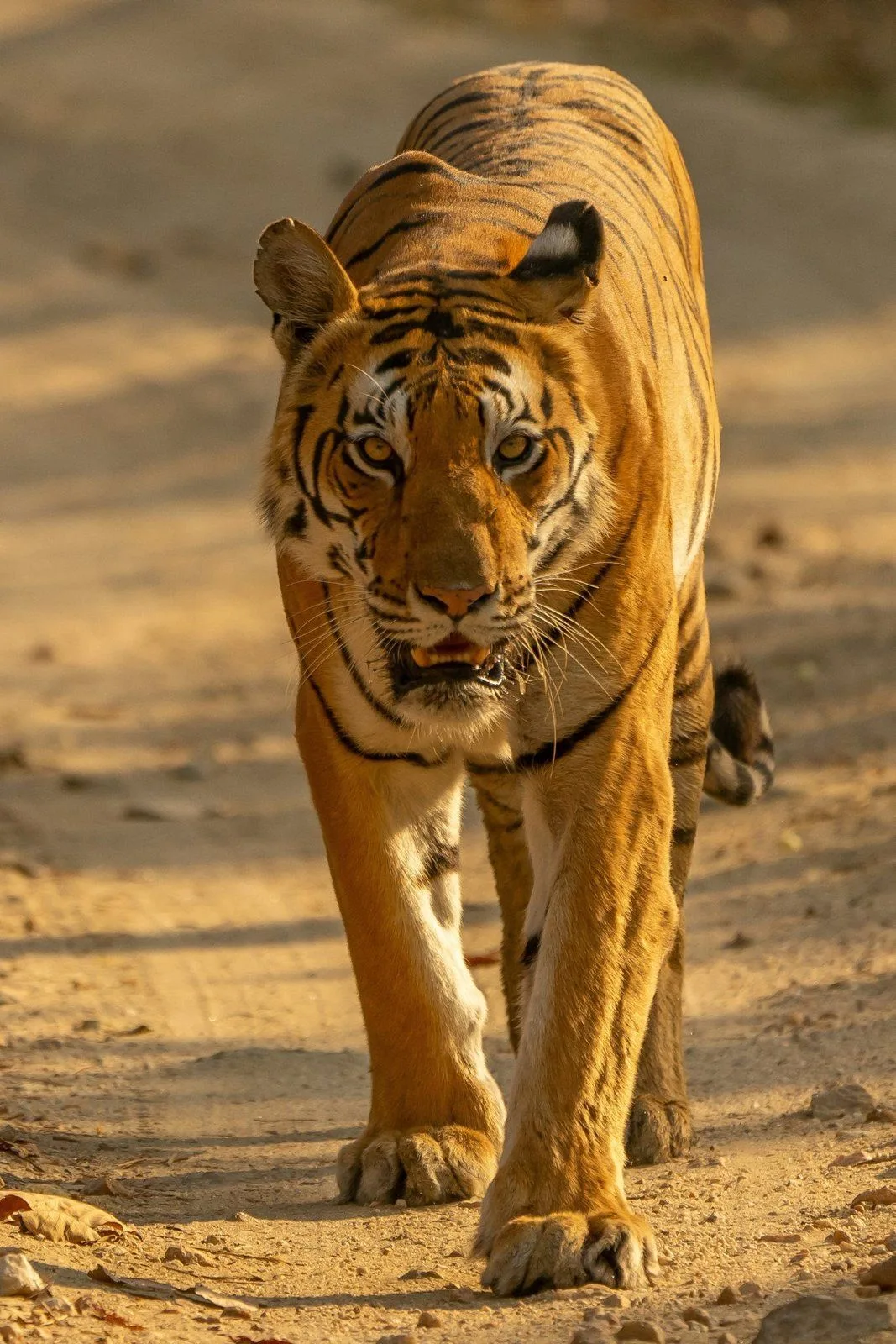
The largest and least disturbed national park in Nepal's lowlands, and the country's best place to track a wild tiger on foot.
The journey
Sal forest, riverine forest and grassland along the Karnali, the longest river in Nepal: wild country, and very few people in it.
The days are led by expert naturalists working with the park’s own guides, and moves between tracking on foot, drives in an open safari vehicle and a river drift, so the search follows the wildlife. A tiger can never be promised, so the days are built to bend.
The Tharu people, who have lived alongside this forest for generations, give the journey its depth.
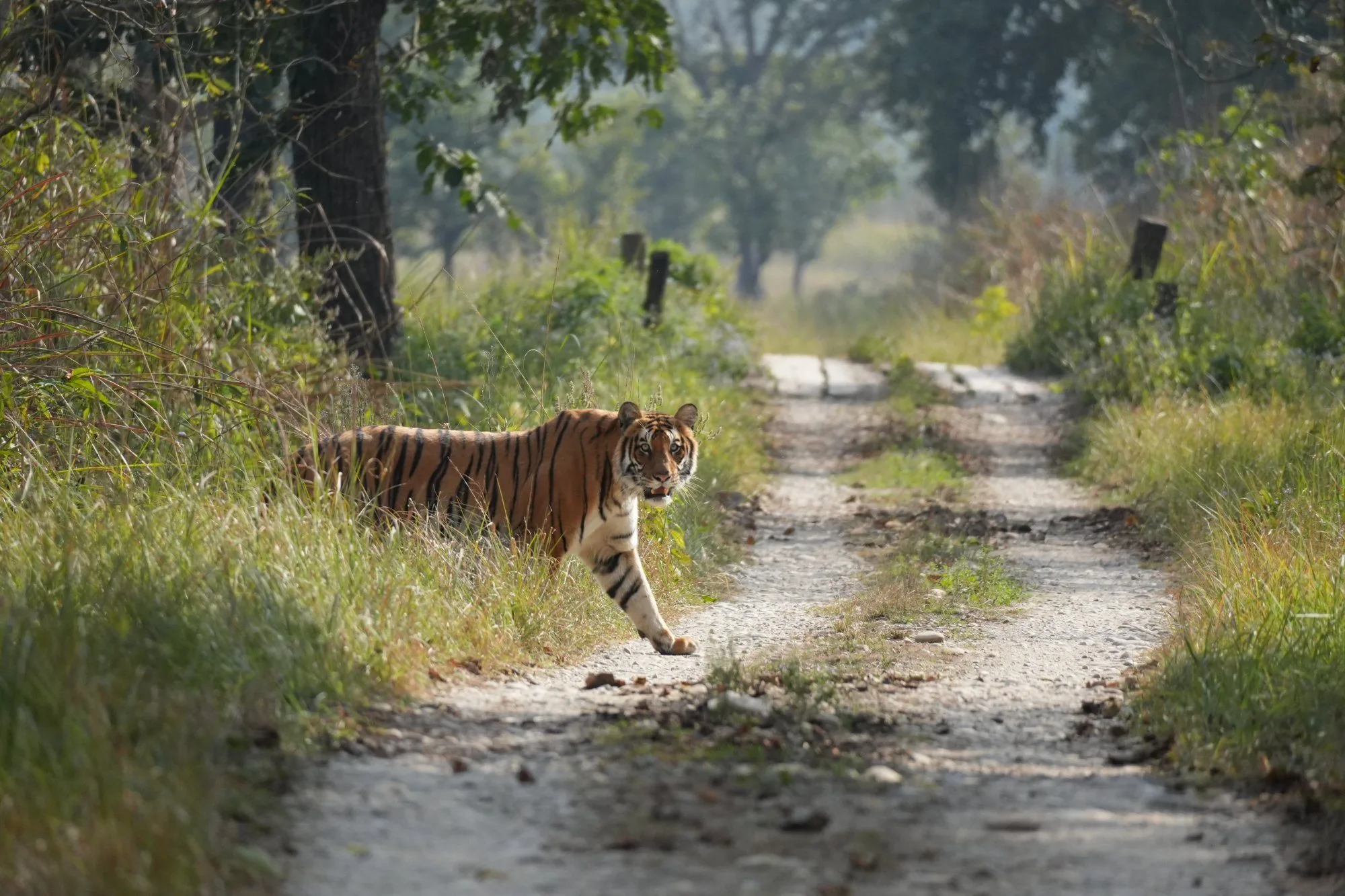
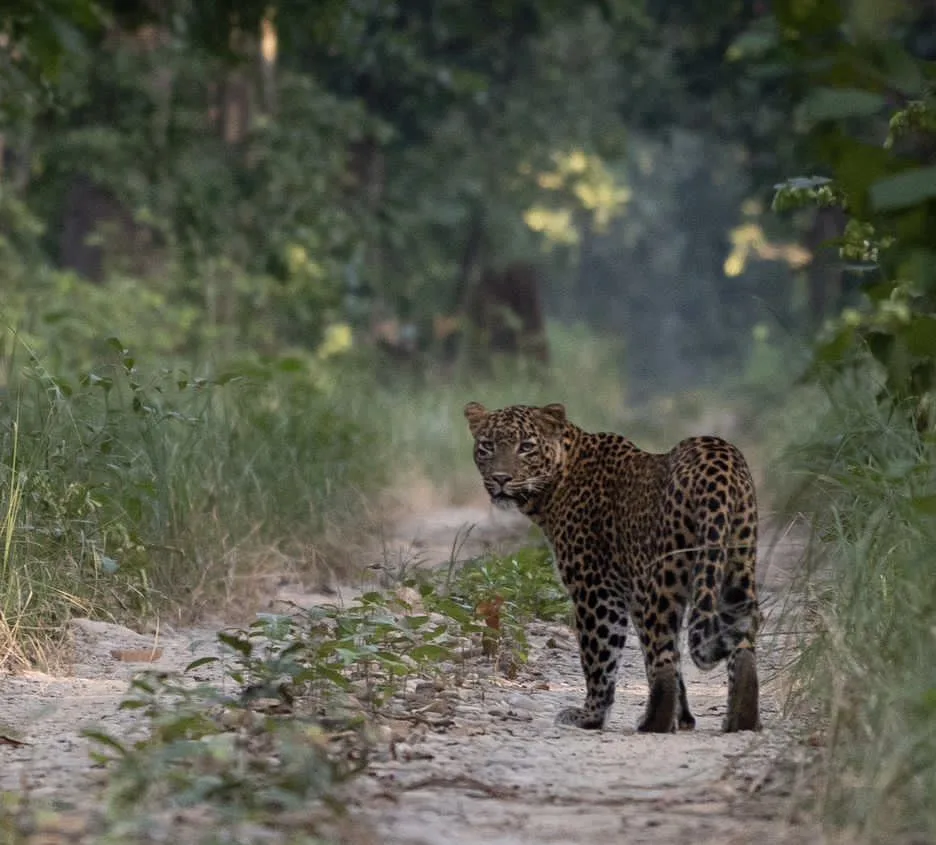
Tracking a wild Bengal tiger on foot, reading pugmarks and alarm calls with expert naturalists and Tharu guides.
- Best season
- October to April; drives by open vehicle pause in the monsoon
- Pace
- Gentle. Suits almost everyone.
- Travel
- Private, on the dates you choose
- Permits
- Park entry and naturalists, arranged by us.
- Highlights
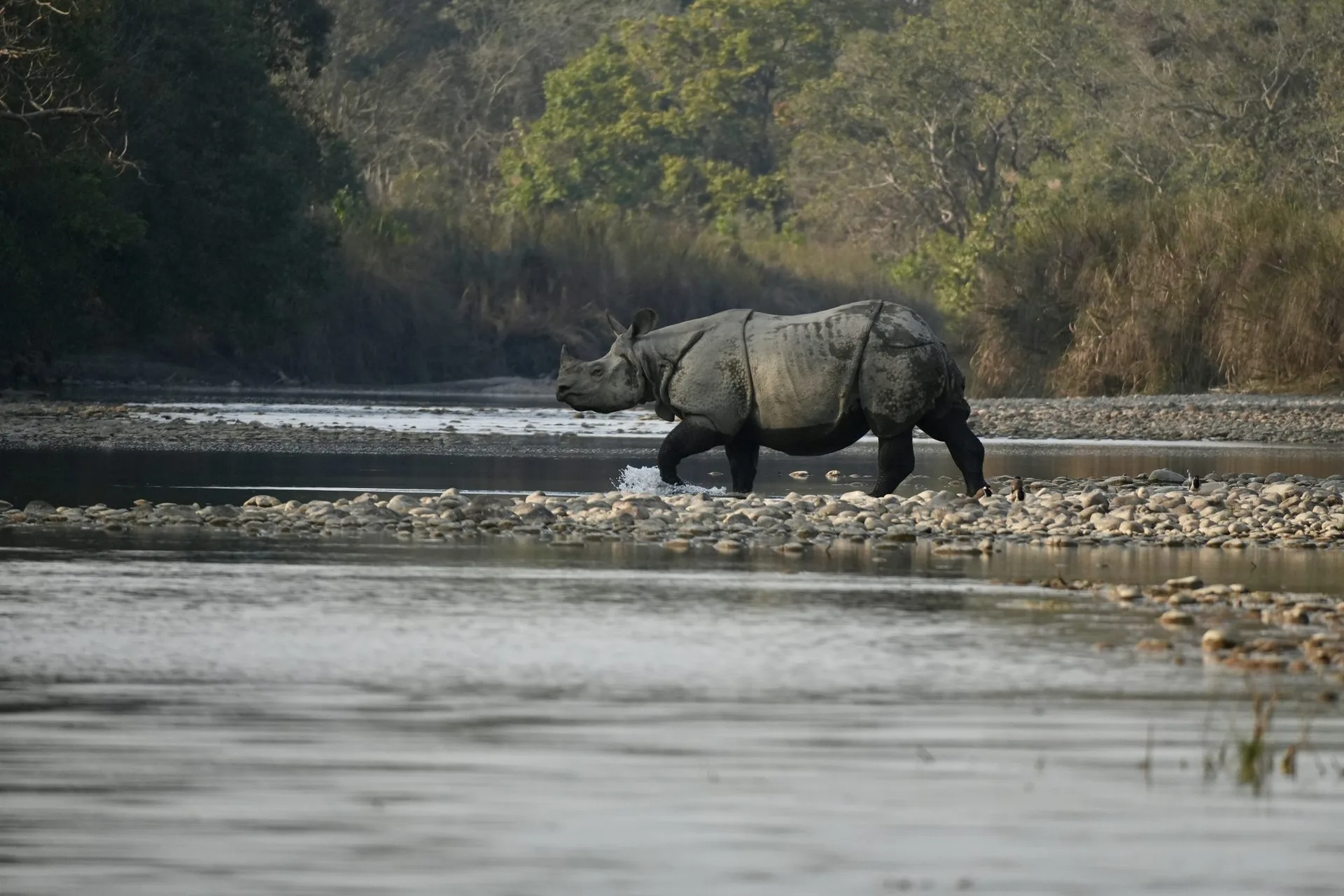
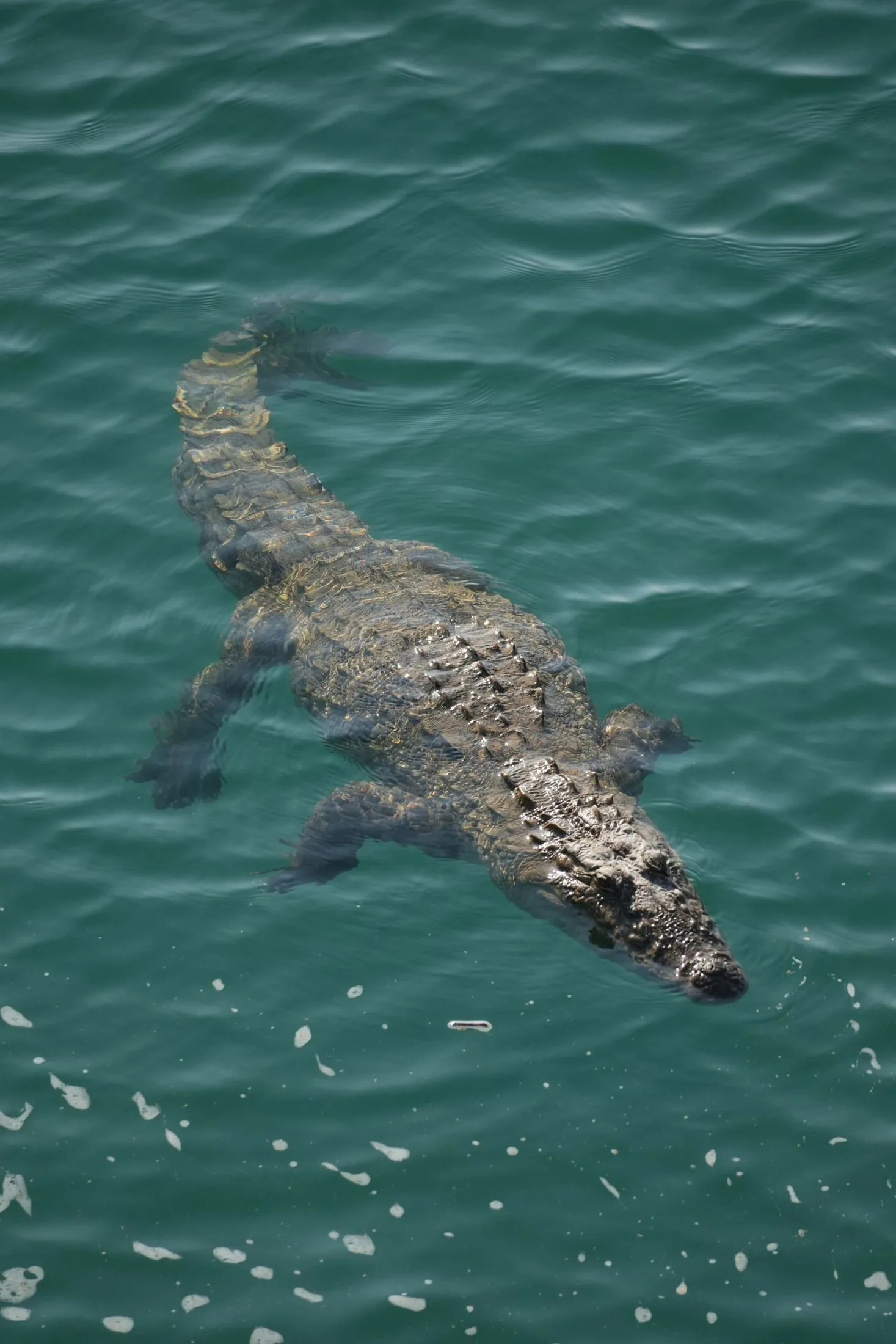
- Bengal tiger, one-horned rhino, Gangetic dolphin, Tharu culture
Day by day
9 days, in 4 chapters.
Arrival in Kathmandu
You are met on arrival and driven privately to your hotel. The rest of the day is yours.
The old valley, and your naturalist
A morning among the temples and courtyards of the Kathmandu Valley, and an evening with your naturalist to talk through the days in the forest.
West to Bardia
An hour’s flight to Nepalgunj and two to three hours by road to the park. An evening walk through a Tharu village, and sunset over the Karnali.
By air and private vehicle
On foot, on the tiger’s trail
To the known tiger grounds of Hatti Machan, Tinkune and Kingfisher, reading pugmarks and listening for alarm calls with the naturalists.
On foot
The grasslands
A day by open vehicle to the Balcony watchtower over the grasslands, and the prime habitat of Bagora Phanta and Lamkauli.
By open vehicle
The river, or the trail again
A slow drift down the Karnali and Geruwa for dolphin, gharial and birds. Or, if the tiger has not shown, a full day more on its trail.
As the forest decides
A day with the Tharu
Time with the Tharu community, and with the patrols that protect the park. The Babai valley is there for those who want it.
The flight to Kathmandu
The drive to Nepalgunj and a flight back to the capital, and a farewell dinner.
By private vehicle and air
Departure
A private car to the airport, and our farewell.
Why it matters
The tiger
came back.
In 2009 Nepal counted 121 wild tigers. The 2026 census counted 429. Bardia, 968 km² of forest and grassland, is the largest and least disturbed national park in the lowlands, and the kind of place that recovery depends on. Alongside WWF and Save Our Rhino, your journey funds the patrols and monitoring that keep it wild, and the Tharu communities who host you.
Sources: National Tiger and Prey Survey 2026; Department of National Parks and Wildlife ConservationHow we travel, and what it funds →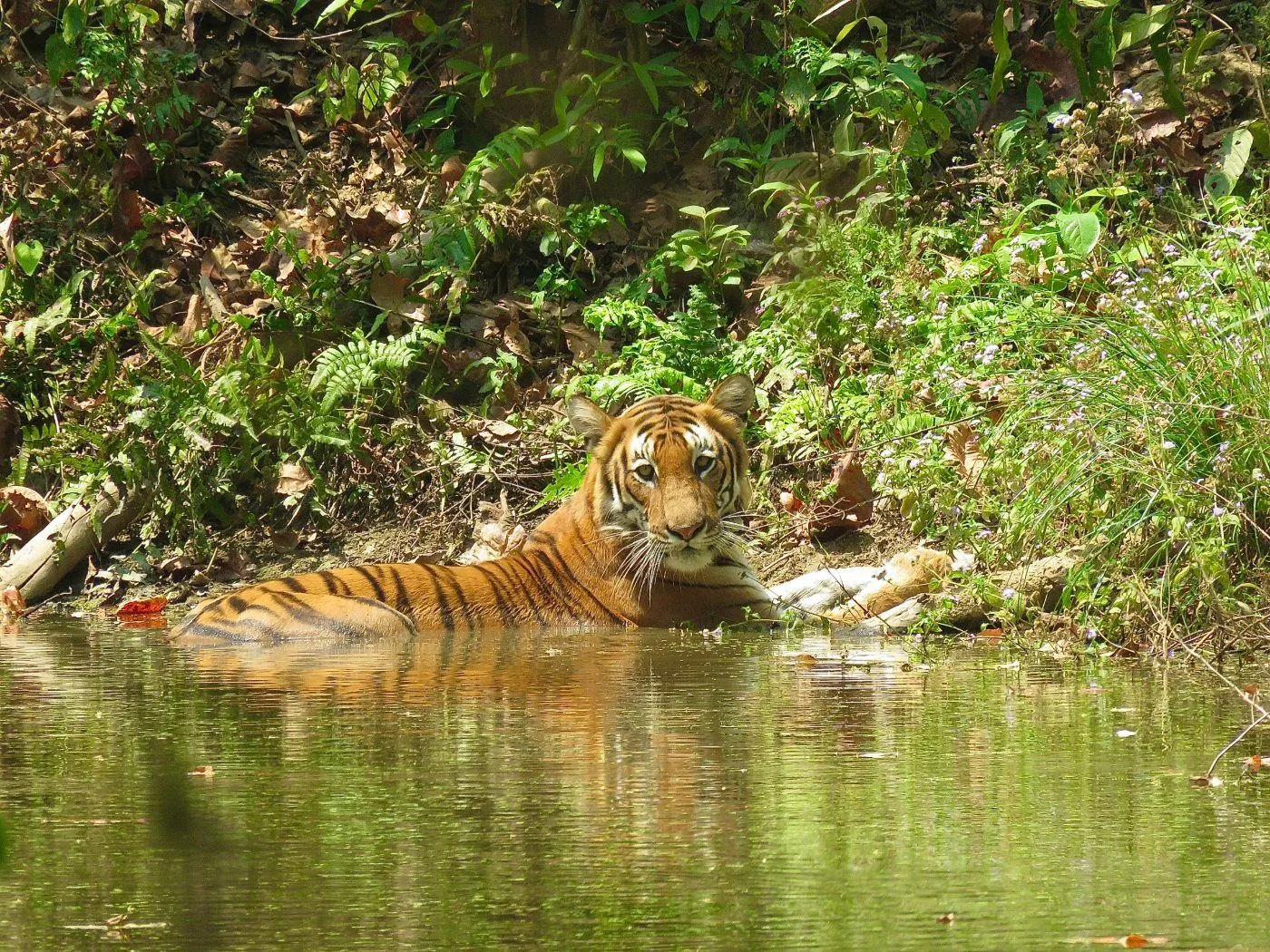
Where you stay
The houses of our collection.
Each house is drawn from our collection.
01
Kathmandu
The Dwarika's
A house built around centuries-old carved wood, rescued piece by piece and set back into brick courtyards.
02
Kathmandu
The Soaltee Kathmandu, Autograph Collection
Kathmandu's grand hotel since 1966, set in twelve acres of gardens with the Himalaya on the horizon.
03
Bardia
Tiger Tops Karnali Lodge
An intimate lodge at the edge of Bardia National Park, from Tiger Tops, who opened Nepal's first wildlife lodge in the 1960s.
The seasons
When to go.
October to April; drives by open vehicle pause in the monsoon.
Every journey is private: for you and the people you travel with, on the dates you choose. Most are planned six to nine months ahead.
Plan this journeyRealm of the Tiger
Track the
striped king.
Tell us when, and with whom. We shape the dates, the pace and every night around you.
 Next journey · WildlifeGhost of the Mountains→