

The Tharu: The People of the Forest
Who the Tharu are, how they made the Terai their home, Maghi and the longhouse, the end of bonded labour, and how to visit a Tharu village near Bardia with respect.
27 November 2026
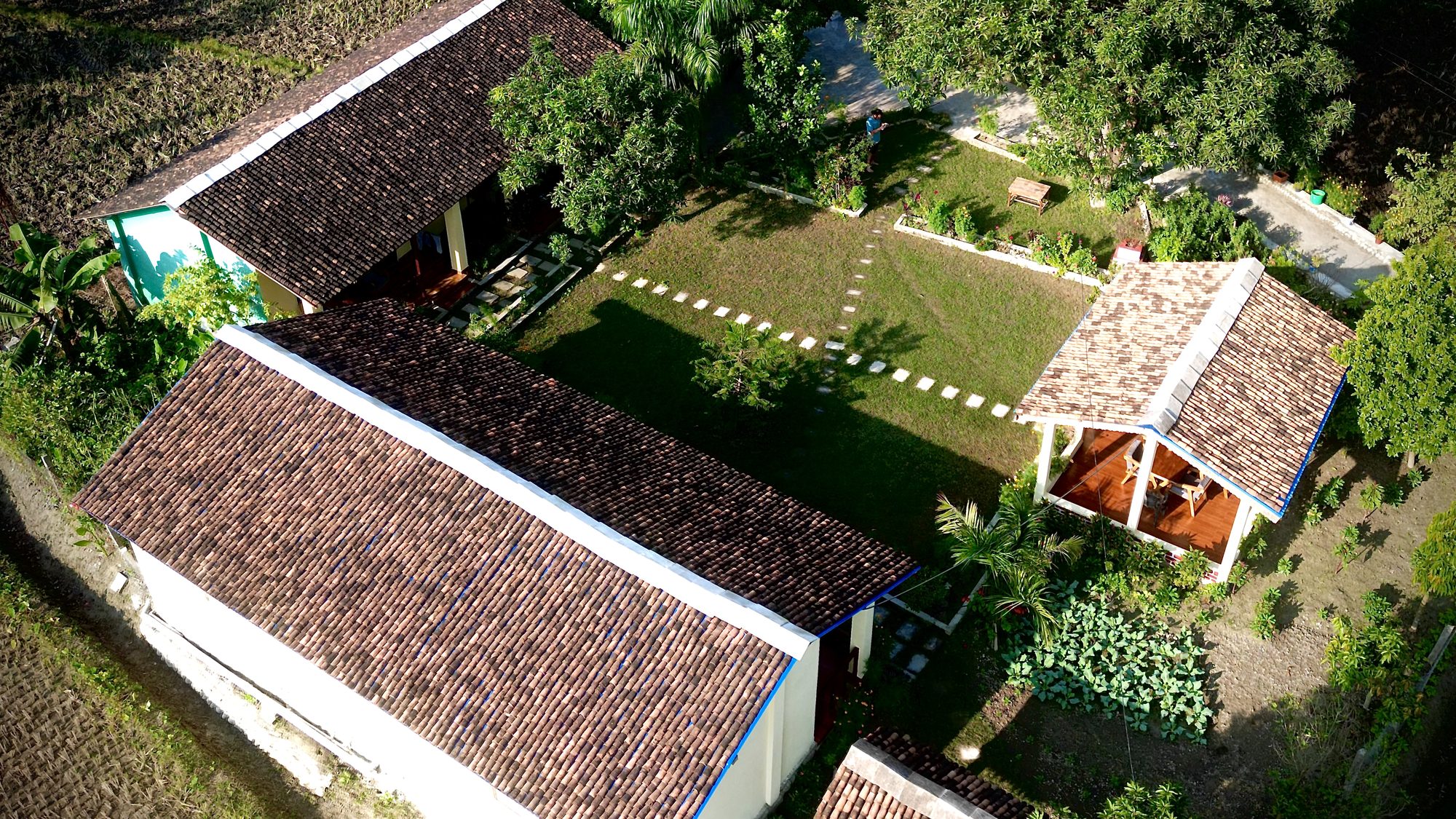
Long before Bardia was a national park, it was home. The Tharu have lived in the lowland forests of the Terai, along Nepal's southern border, for longer than written records reach. They fished its rivers, farmed its clearings, built their houses from its mud and grass, and learned to live alongside its tigers and elephants.
Anyone who travels to Bardia meets the Tharu: in the villages around the park, in the fields, on the river, and often walking beside them in the forest. This is a short introduction to who they are, written with care, and with the hope that you will learn far more from them than from us.
Who the Tharu are
The Tharu are one of the indigenous peoples of Nepal, and the largest of the Terai. Nepal's 2021 census counted 1,807,124 Tharu, about 6.2 per cent of the country. They live across the length of the lowlands, from the far west to the east, and in the neighbouring parts of India. Most speak a Tharu language alongside Nepali.
They are not one single group. Tharu communities in different parts of the Terai have their own dialects, dress, customs and histories. The Tharu of Bardia and its neighbouring districts have traditions of their own, which is part of why time in their villages is worth taking slowly.
Living with the forest
For centuries the Terai was a hard place to live. Its forests were thick, its summers fierce and its malaria deadly to many who came down from the hills. The Tharu made it their home. Scientists have long noted their resilience to malaria, and historians describe how Tharu and other Terai peoples turned what outsiders feared as "deadly places" into home.
That changed in the 1950s, when a campaign against malaria opened the lowlands to settlers from the hills. Forests were cleared for farms, and in the years that followed many Tharu families lost land they had worked for generations. It is a history still felt in the villages today.
The end of bonded labour
The hardest part of that history is the Kamaiya system, a form of bonded labour under which many Tharu families in the west worked for landowners to pay off debts that rarely ended. Girls were often sent to work as domestic servants under a related system called Kamlari.
On 17 July 2000, the government of Nepal declared all Kamaiyas free. The Kamlari system was later declared illegal too. The work of rebuilding lives, homes and livelihoods has gone on for a generation since, and much of it has been done by Tharu communities themselves. When you visit, you are visiting people who have come through this.
The longhouse and the village
The traditional Tharu house is built of mud and grass, with walls often painted or moulded in relief, and grain stored in tall clay vessels inside. Larger families once lived together in longhouses, and some still do.
Villages in Bardia have long been organised under the Badghar system, in which each village chooses its own headman to settle disputes, organise shared work and look after common land. Efforts continue to keep the system alive as a way of governing the commons.
Maghi
The greatest festival of the Tharu year is Maghi, their new year, on the first day of the Nepali month of Magh, in mid-January. Families gather, food is shared, there is music and dance, and in many villages the decisions of the coming year are made. It was once also the day on which the terms of bonded labour were set. Today it is a celebration of freedom as much as of the new year.
Tharu food
Tharu cooking is rooted in the river and the field: rice, fish, freshwater snails, lentils and greens from the garden. One dish you will likely meet is dhikri, a steamed dumpling of rice flour, shaped by hand. A meal in a Tharu home, cooked from what grows within sight of the door, is among the warmest welcomes in Nepal.
The Tharu and the tiger
Nepal's tigers recovered because the people who live beside them chose to share their land with them. Around Bardia, many of the people who guide visitors and guard the forests come from the villages beside the park. Community forests, many managed by Tharu user groups, give tigers the corridors they need to move between parks.
It is not an easy bargain. Tigers and elephants take livestock and crops, and sometimes lives. That Bardia still has its tigers owes much to the patience of the people around it. Part of every GLOCAL Village journey funds the patrols and the communities who host you. Our Conservation page sets out how.
Visiting a Tharu village
On our journey, Realm of the Tiger, one day is spent with the Tharu community and with the patrols that protect the park. Some travellers also stay a night with a family. In Dalla, at the edge of the park, Tharu households have welcomed guests in a community homestay since 2010, supported by WWF.
A few things make a visit better for everyone:
- Ask before you photograph anyone, and accept a no gracefully.
- Take off your shoes where your hosts do.
- Eat what is offered, even a little, and say if there is anything you cannot eat.
- Ask questions. People are usually glad to talk about their lives, their festivals and their forest.
Questions we are often asked
Who are the Tharu? An indigenous people of Nepal's lowlands, the Terai, and the largest indigenous group there. Nepal's 2021 census counted about 1.8 million Tharu.
What is Maghi? The Tharu new year, on the first day of the month of Magh, in mid-January.
Can you visit a Tharu village? Yes. Villages around Bardia welcome visitors, and some, such as Dalla, offer community homestays.
What is the Kamaiya system? A form of bonded labour under which many Tharu families in western Nepal were tied to landowners by debt. It was abolished on 17 July 2000.
Begin with a conversation
Tell us how much time you would like to spend in the villages, and your journey designer in Kathmandu will compose the days around you.
Sources
- Population in the 2021 census: Wikipedia, Ethnic groups in Nepal, citing the National Statistics Office.
- Malaria and the Terai peoples: Social Science Baha, Adivasi Body, Malaria, and the State in Nepal.
- The freeing of the Kamaiyas on 17 July 2000, and Maghi: Indigenous Voice.
- Kamaiya and Kamlari declared illegal; the Badghar model: Tharu Barghar-Mukhiya Indigenous Model, Academia and The Himalayan Times.
- The Dalla community homestay since 2010: WWF Nepal.
Realm of the Tiger
See the journey