

The One-Horned Rhino: Nepal's Other Recovery
Nepal's greater one-horned rhinos fell to about 100 in the 1960s and now number 752. Where they live, how many remain worldwide, and where to see one in Nepal.
27 November 2026
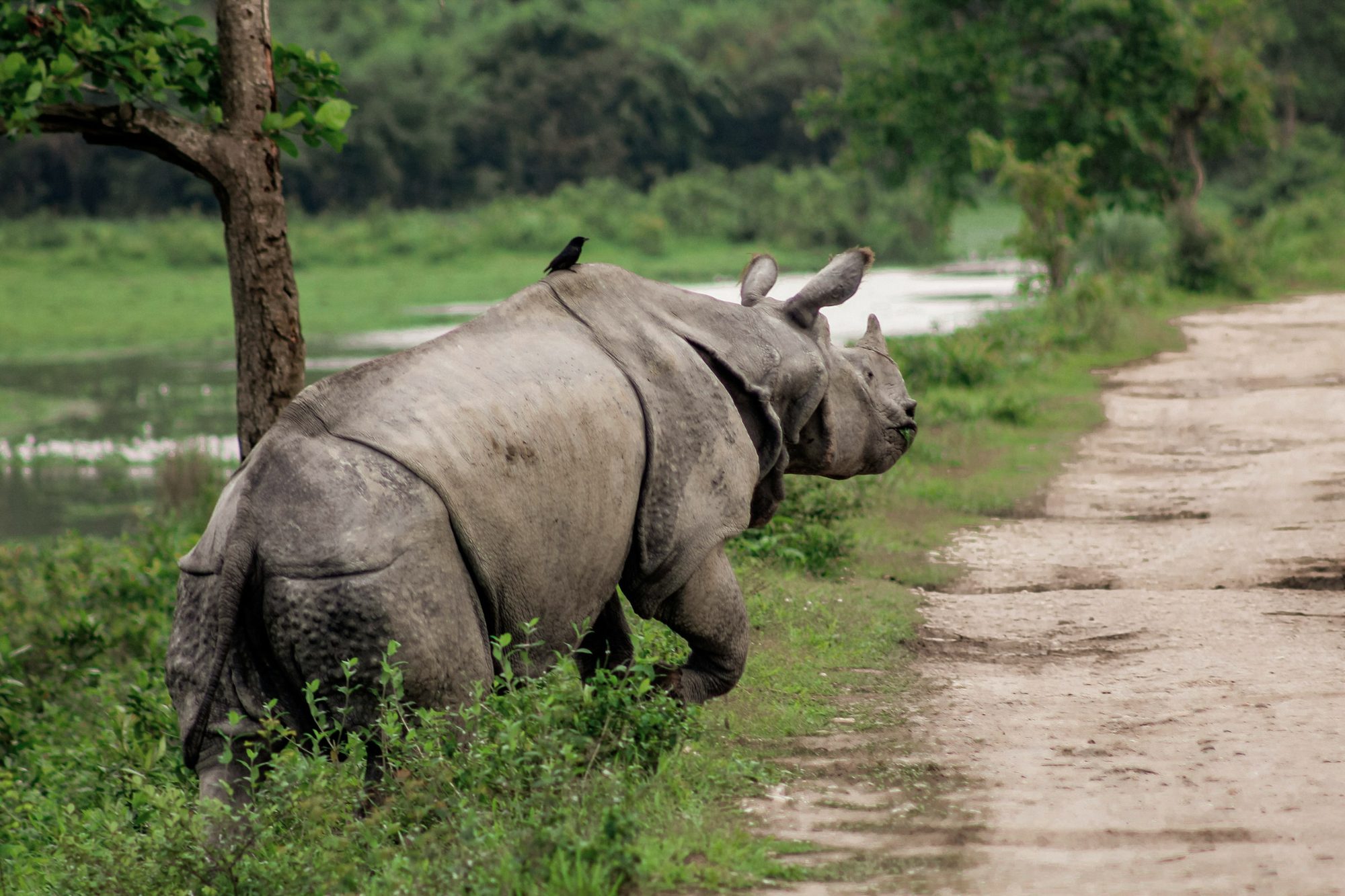
The tiger is the cat people travel to Nepal's lowlands for. The animal they often remember just as clearly is the rhino: a great grey shape rising out of the river grass at dawn, its skin folded like plates of armour, a single horn on its nose.
The greater one-horned rhinoceros came close to vanishing from Nepal. In the 1950s there were about 800. By the 1960s, about 100 were left. Today there are 752. This is how that happened, where the rhinos live, and where you can see one.
The short answer
Nepal has 752 greater one-horned rhinos, according to its last national count in 2021. Almost all live in Chitwan National Park. Worldwide there are about 4,075, all of them in India and Nepal. The species is classed as Vulnerable, and its numbers are rising.
The animal
The greater one-horned rhinoceros is the largest of the three Asian rhinos and one of the largest land animals in Asia. A grown male can weigh more than two tonnes. Its skin hangs in deep folds over its shoulders and thighs, which gives it its armoured look. Its single horn, made of keratin like a fingernail, is shorter than an African rhino's.
It is an animal of grassland and river. It grazes on tall grass, wades and wallows to keep cool, and spends much of the hot season in water. It is mostly solitary. Its eyesight is poor, its hearing and sense of smell are sharp, and when surprised at close range it may charge.
Near the edge, and back
The one-horned rhino once ranged across the floodplains of northern South Asia. Hunting, farming and the clearing of the Terai after the 1950s pushed it into a few small refuges. In Nepal, numbers fell from about 800 in the 1950s to about 100 in the 1960s.
Chitwan was protected in 1973, and the rhino became one of the reasons it was made a national park. Patrols by Nepal's army and park staff, the work of buffer-zone communities and strict laws against poaching brought the population back. Nepal's count has risen to 752, and no rhino has been killed by poachers in Chitwan since October 2023.
Where the rhinos live today
| Park | Rhinos (2021 count) |
|---|---|
| Chitwan | 694 |
| Bardia | 38 |
| Shuklaphanta | 17 |
| Parsa | 3 |
| Nepal | 752 |
Across the border, India holds about 3,323, most of them in Assam. Together, the two countries hold every greater one-horned rhino in the wild.
Bardia's rhinos
Bardia had no rhinos left by the early 1980s. From 1986, Nepal began moving animals west from Chitwan to start a second population. The first rhinos were released in the Babai Valley, and more followed in later years, most recently eight in 2016 and 2017.
The new population had a hard start. Many rhinos were lost to poaching during Nepal's armed conflict, and a study published in 2026 found that the Babai Valley lacks the grassland and year-round water rhinos need, forcing those released there to range widely. Today Bardia holds 38, most of them along the Karnali. Sightings are possible, but far less certain than in Chitwan.
The pressures now
Poaching has fallen sharply, but rhinos still die from other causes. In Chitwan, 22 died in the fiscal year 2025/26, and 133 over the past five years, from old age, fights between males, being trapped in mud, electrocution and attacks by tigers. As Chitwan's best grassland fills, the government continues to move rhinos to other parks.
The way rhinos are counted is changing too. Nepal has long counted them from elephant back by direct sighting. The authorities are now preparing a new method using DNA from dung, camera traps, or both, which will make the next count more accurate.
Where to see a one-horned rhino in Nepal
Chitwan is the place to be all but certain of a rhino. Most visitors see several, often on the first afternoon, on a drive, a walk or a canoe trip on the Rapti river.
Bardia offers rhinos with fewer people around, along the Karnali and its grasslands, but you should come for the tiger and treat a rhino as a gift. On our journey, Realm of the Tiger, a few days in Chitwan can be added for exactly this reason.
On foot, a rhino commands respect. It can charge when surprised, and the naturalists who walk with you will keep a careful distance.
Questions we are often asked
How many one-horned rhinos are left? About 4,075 in the wild, according to the International Rhino Foundation's 2025 report: about 3,323 in India and 752 in Nepal.
Where can you see a one-horned rhino in Nepal? Most reliably in Chitwan National Park. Bardia and Shuklaphanta have smaller populations.
Is the one-horned rhino endangered? It is classed as Vulnerable. Its numbers have risen steadily for decades.
How big is a one-horned rhino? A grown male can weigh more than two tonnes.
Begin with a conversation
Tell us whether the rhino, the tiger or both matter most to you, and your journey designer in Kathmandu will compose the days to give each its time. Part of every journey funds the patrols that protect them; our Conservation page sets out how.
Sources
- Nepal's counts, park figures, deaths in Chitwan, the poaching record and the new census method: Kathmandu Post, 23 September 2026.
- Global and Indian numbers: International Rhino Foundation, State of the Rhino 2025.
- Bardia's translocations and the Babai Valley study: Mongabay, June 2026 and Wikipedia, Bardiya National Park.
- Chitwan's protection in 1973: National Parks of Nepal.
Realm of the Tiger
See the journey