

Bardia or Chitwan? Where to See a Tiger in Nepal
Chitwan now has more tigers. Bardia is where many travellers go to find one on foot. The 2026 census, the way in, the seasons, and how to choose.
27 November 2026
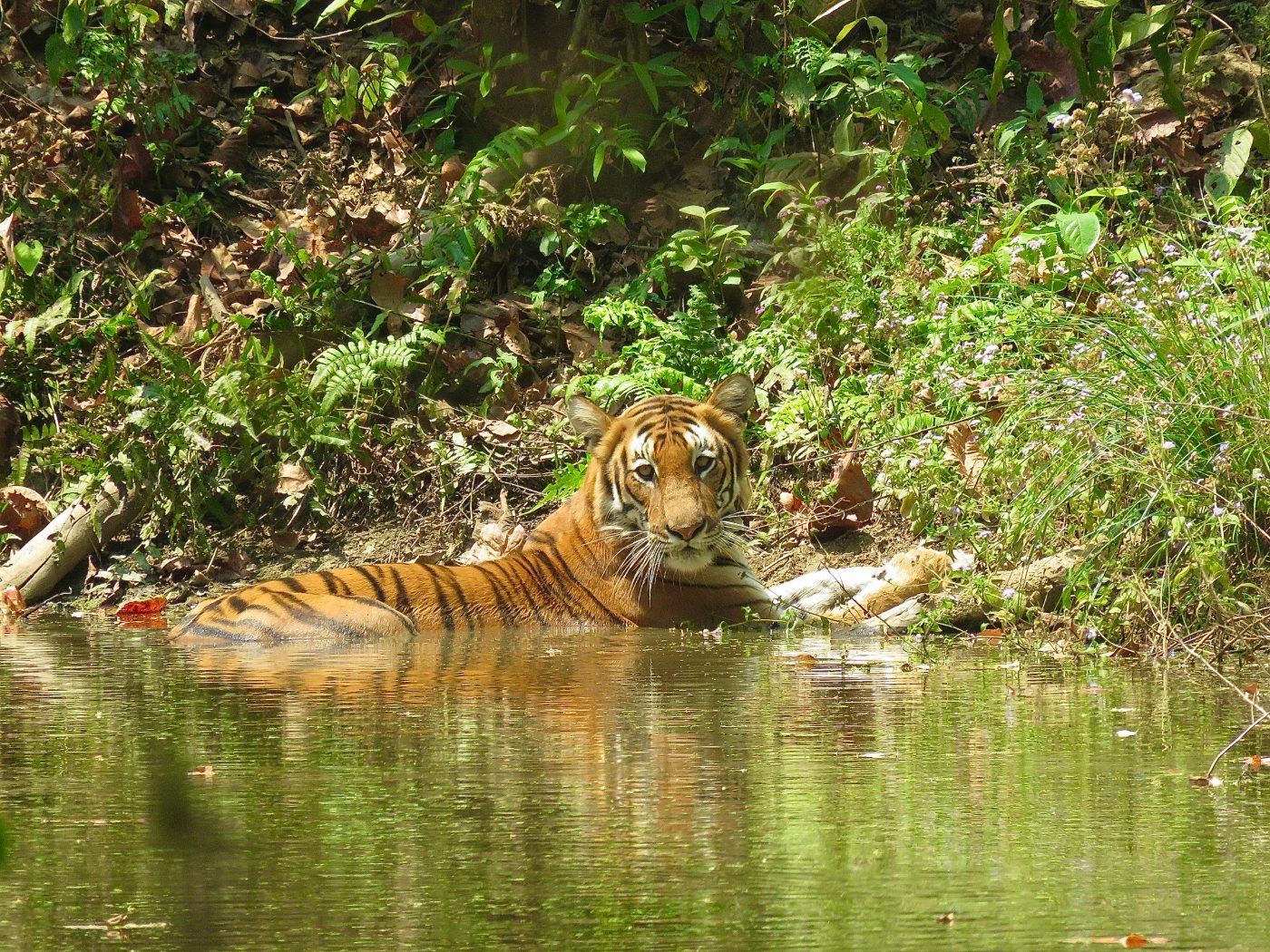
Nepal keeps its wild tigers in the lowlands along the Indian border, in a belt of sal forest, tall grass and braided river called the Terai. Two parks there draw most travellers: Chitwan, in the centre of the country, and Bardia, in the far west. Both protect the Bengal tiger, the one-horned rhino and the wild elephant. They are two very different journeys. This is how they compare at the end of 2026, using the national tiger census released in July.
The short answer
If the tiger is the reason you are going, choose Bardia and give it time: four or five days in the forest, not two. If you have two or three days, want to be all but certain of a rhino, or are travelling with young children, choose Chitwan. If you have time for both, see Chitwan first and end in Bardia.
Our own journey, Realm of the Tiger, is built around Bardia for that reason.
The two parks in numbers
| Chitwan | Bardia | |
|---|---|---|
| Tigers, 2026 census | 145 | 112 |
| Tigers, 2022 census | 128 | 125 |
| One-horned rhinos, last count (2021) | 694 | 38 |
| Area | 952 km² | 968 km² |
| Protected as a national park since | 1973 | 1988 |
| From Kathmandu | A short flight to Bharatpur, or about five hours by road | About an hour's flight to Nepalgunj, then about three hours by road |
The census changed one thing that many guides still repeat. Chitwan now holds more tigers. Nepal counted 429 wild tigers in 2026, up from 355 in 2022, and every tiger park rose except one. Bardia fell, from 125 to 112. Researchers are still studying why. The leading explanations are young tigers dispersing into community forests and across the border into India as the park filled, deaths in fights over territory, and pressure at the park's edges. Bardia remains home to the second-largest population in the country.
So why do so many people who come for the tiger still choose Bardia? The answer is not the count.
Why Bardia, for the tiger
A tiger is seen where it can be seen. Bardia's forest opens onto wide riverbanks along the Karnali and its branch, the Geruwa, and onto grasslands such as Bagora Phanta. In the dry months tigers come to the water to drink and to cool off, and a quiet watcher at the right crossing has a real chance.
Bardia is also quiet. Chitwan receives far more visitors, and its main gateway, Sauraha, is a busy village of lodges and jeeps. In Bardia the trails are emptier, fewer vehicles work the park, and much of the tracking is done on foot: reading pugmarks in the sand, listening for the alarm call of a spotted deer or a langur, then waiting, sometimes for hours, at a place a tiger is known to cross.
Guides, lodges and travellers who know both parks broadly agree that this patient, unhurried tracking gives Bardia the better odds of a sighting, even with fewer tigers. Nobody can promise a tiger in either park. A good journey is built to bend around the forest, with more time where the signs are fresh.
Why Chitwan
For the one-horned rhino, Chitwan has no rival. At the last count it held 694 of Nepal's 752 rhinos, and most visitors see several, often on the first afternoon. Bardia had 38.
Chitwan is also easier to reach and has a wider choice of lodges. It is a World Heritage Site, it rewards a short stay of two or three nights, and it suits a first visit to the Terai, young children, or a journey with little time to spare. Its tigers are there, and in greater numbers than ever. They are simply harder to find in thicker forest among more people.
How long each needs
Give Chitwan two or three nights. Give Bardia at least three, and four or five if a tiger is the point. Tracking on foot rewards repetition: the same riverbank at dawn on three mornings, a second visit to a crossing where fresh pugmarks appeared the day before.
Realm of the Tiger spends five nights in Bardia, with three full days on the tiger's trail and a fourth with the Tharu, the people who have lived beside this forest for generations.
When to go
Both parks are at their best from October to May. The Nepal Tourism Board names October to March as the main season. For tigers, the late dry season is better: from February, after the yearly grass cutting in winter, the sightlines open and water becomes scarce, so animals gather at the rivers and are easier to see. April and May are hot, with afternoons that can reach the low forties Celsius, and the mornings and evenings are the hours to be out. From July to September the monsoon floods the grasslands, and drives into the park pause.
On foot
Both parks allow guided walks, and in both a licensed guide is required inside the park. Walking among tigers, rhinos and wild elephants carries a real risk. Serious incidents are rare, and the rhino and the wild elephant are as much a danger to a walker as the tiger. The answer is experience: walk with naturalists who know the animals and the ground, keep together and quiet, and follow every instruction on the spot. How we work sets out how we choose the people you walk with.
Can you do both?
Yes, and many travellers do. The two parks are a full day apart by road, or can be joined by flights through Kathmandu. Seen in that order, Chitwan gives you the rhino and the Terai, and Bardia gives you the time and silence that a tiger asks for.
Questions we are often asked
Which park has more tigers, Bardia or Chitwan? Chitwan. The 2026 national census counted 145 tigers in Chitwan and 112 in Bardia.
Are you more likely to see a tiger in Bardia? Many guides and travellers think so, because of Bardia's quieter trails, open riverbanks and tracking on foot. No park can guarantee a sighting.
How many days do you need in Bardia? At least three nights, and four or five if seeing a tiger matters most to you.
Can you see rhinos in Bardia? Yes, but there are far fewer: 38 at the last count, against 694 in Chitwan.
Can you walk inside the parks? Yes, with a licensed guide. In Bardia, walking is the heart of tiger tracking.
Begin with a conversation
Tell us when you would like to travel, how many days you have, and whether the tiger, the rhino or both matter most. Your journey designer in Kathmandu will reply promptly and shape Realm of the Tiger around you, with Chitwan added if you wish.
Sources
- 2026 and 2022 census figures by park, and the possible reasons for Bardia's fall: Nepal News, July 2026 and Kathmandu Post, 29 July 2026.
- Rhino counts, park areas, the years each park was protected, the way in, Chitwan's visitor numbers and smaller jeep fleet in Bardia: National Parks of Nepal, Chitwan or Bardiya? and The one-horned rhinoceros in Nepal.
- The way in to Bardia, seasons, temperatures and wildlife: Nepal Tourism Board, Bardiya National Park.
- Grass cutting and the February to May tiger season: Magical Nepal, Bardiya guide 2026 and Bardia Eco Lodge, Tigers.
- A licensed guide required inside the park: The Longest Way Home, Bardia guide.
- Rhino, tiger and elephant attacks around Chitwan: Asia News Network.
- Agreement among guides and travellers that Bardia gives better tiger odds: Tripadvisor Nepal forum and National Parks of Nepal.
- Our itinerary, nights in Bardia and place names: our Realm of the Tiger page, checked November 2026.
Realm of the Tiger
See the journey