

Are There Tigers in Africa? Where to See One Instead
No. Wild tigers live only in Asia, and never lived in Africa. Where they live now, how many remain, and where to see one after an African safari.
27 November 2026
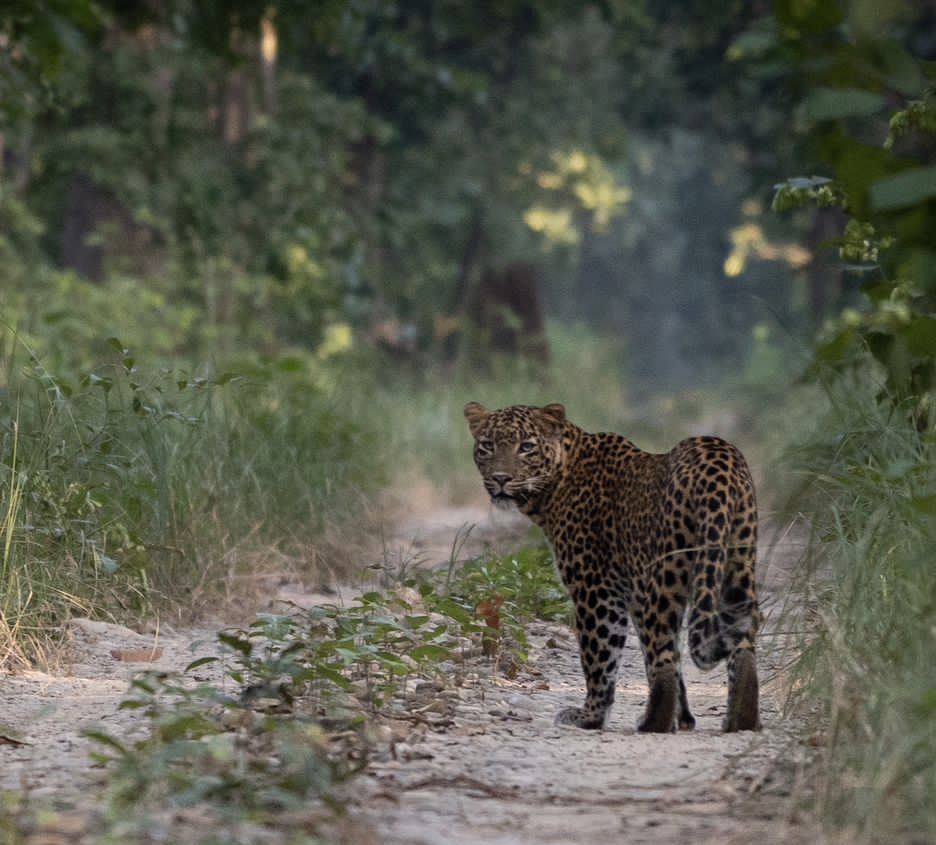
No. There are no wild tigers in Africa, and there never have been. The tiger is an Asian cat. Every wild tiger alive today lives in Asia, from the mangroves of Bangladesh to the snowy forests of the Russian Far East.
It is a fair question, and a common one. Africa is where most people take their first safari, and the tiger is the one great cat it cannot show you. This is where tigers do live, how many remain, and where a traveller who knows Africa can find one.
Why there are no tigers in Africa
The tiger evolved in Asia and spread across it, from eastern Turkey and the Caspian to Siberia, Java and Bali. It never crossed into Africa. Africa's big cats are the lion, the leopard and the cheetah, and the Big Five of an African safari are the lion, leopard, elephant, buffalo and rhino.
You may come across tigers in Africa in a few private places. One reserve in South Africa keeps tigers that came from captive stock. They are not a wild population, and they are not what this article means by a wild tiger.
Where wild tigers live today
Wild tigers survive in a small part of their old range: by WWF's measure, less than five per cent of it. The countries that hold them include India, Nepal, Bhutan, Bangladesh, Russia, China, Indonesia (on Sumatra), Malaysia, Thailand and Myanmar. In 2026 a new chapter began in Central Asia: on 31 July, Kazakhstan released a tigress named Umit, "hope", into the wild, the first free-ranging tiger there in about 70 years.
The tigers you are most likely to see are Bengal tigers in India and Nepal. Together the two countries hold the large majority of all wild tigers.
How many tigers are left?
The latest global estimate, from the Global Tiger Forum in 2023, is about 5,574 wild tigers. That figure is higher than the 3,200 or so thought to remain in 2010, the year the tiger countries agreed to try to double their numbers.
Two national counts shape it. India estimated 3,682 tigers in 2022, and ran a new count through 2026, with results expected in 2027. Nepal counted 429 tigers in 2026, up from 121 in 2009, among the fastest recoveries anywhere.
The one country with both
If you have watched lions in the Mara or the Okavango and wondered whether lions and tigers ever share a country, the answer is India. Wild lions survive in Asia only in Gir, in the state of Gujarat, and India holds most of the world's wild tigers. The two cats do not share a forest there, but they share a country, and nowhere else does.
Where to see a wild tiger after Africa
India gives the highest odds of a sighting in the world, from a vehicle, in reserves such as Ranthambore, Bandhavgarh, Kanha and Tadoba. The reserves are popular, and walking inside them is generally not permitted.
Nepal gives something an African traveller often misses after a first tiger drive: the walk. In Bardia National Park, in Nepal's far west, much of the tracking is done on foot with naturalists, reading pugmarks in the sand and waiting at river crossings, much as a walking safari in Zambia reads lion spoor. The park is quiet, with 112 tigers in the 2026 count, rhinos and wild elephants, and the Karnali river running through it. The odds are lower than India's best, and no park can promise a tiger. A good journey simply gives the forest time.
Bhutan and Russia hold wild tigers too, but sightings there are rare and are not the reason to go.
What will feel familiar, and what will not
An African traveller in Bardia will recognise a great deal: the early starts, the open vehicle, the naturalist reading the ground, the alarm calls that tell you a cat is near. Much will be new: thick sal forest instead of open savannah, a cat that hunts alone and is rarely seen in the open, and grass as tall as a person until it is cut in winter. The landscape asks for patience rather than a wide view.
The seasons fit well. East Africa's busiest months run from July to October. Bardia's best months for tigers are February to May. A traveller can do both in a year without either one crowding the other.
Questions we are often asked
Are there tigers in Africa? No. There are no wild tigers in Africa. All wild tigers live in Asia.
Did tigers ever live in Africa? No. The tiger evolved in Asia and never spread to Africa.
Which countries have wild tigers? India, Nepal, Bhutan, Bangladesh, Russia, China, Indonesia, Malaysia, Thailand and Myanmar, with a new reintroduced population in Kazakhstan since 2026.
Is there anywhere with both wild lions and wild tigers? India, the only country with both.
Where is the best place to see a wild tiger? India's leading reserves give the best odds. Nepal's Bardia National Park is the place to track one on foot.
Begin with a conversation
Tell us where you have been on safari, and what you hope to see next. Your journey designer in Kathmandu will reply promptly and shape Realm of the Tiger around you, at the season that suits you.
Sources
- Global estimate of 5,574 wild tigers and the 2010 low: WWF and Global Tiger Forum, July 2023.
- Tigers restricted to less than five per cent of their historic range: WWF.
- Kazakhstan's release of the tigress Umit on 31 July 2026: Conserve Wildcats, August 2026 and WWF Central Asia.
- India's 2022 estimate and 2026 count: Nature Safari India and AITE 2026 press release.
- Nepal's 2026 census: Kathmandu Post.
- Walking in Nepal, vehicle safaris in India: Responsible Travel.
- East Africa's seasons: Adventure Out Loud, best time to go on safari, November 2026.
Realm of the Tiger
See the journey